
[POLYMETALLIC]
Bobija Project
Massive Sulphide Targets
Gold, Silver, Lead, Zinc, Copper
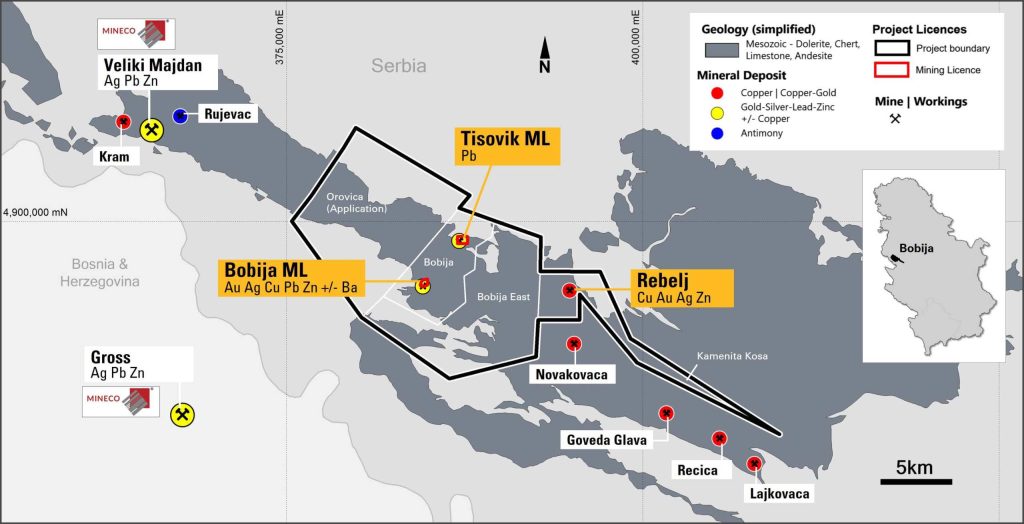
The Bobija Project area is located in central western Serbia and overlies a highly mineralised NW-SE trending corridor that hosts significant mineral deposits including the Veliki Majdan underground silver-lead-zinc mine operated by Mineco Ltd.
The project licences include multiple historic mines primarily developed for the exploitation of barite and base metal mineralisation including the Rebelj (copper), Tisovik (lead) and Bobija (barite) mines.
The Company considers that the project area is highly prospective for the discovery of a range of deposit types including:
- volcanogenic massive sulphide base and precious metal deposits (VMS), and
- sediment-hosted replacement style copper-gold deposits (CRD).
Tenure
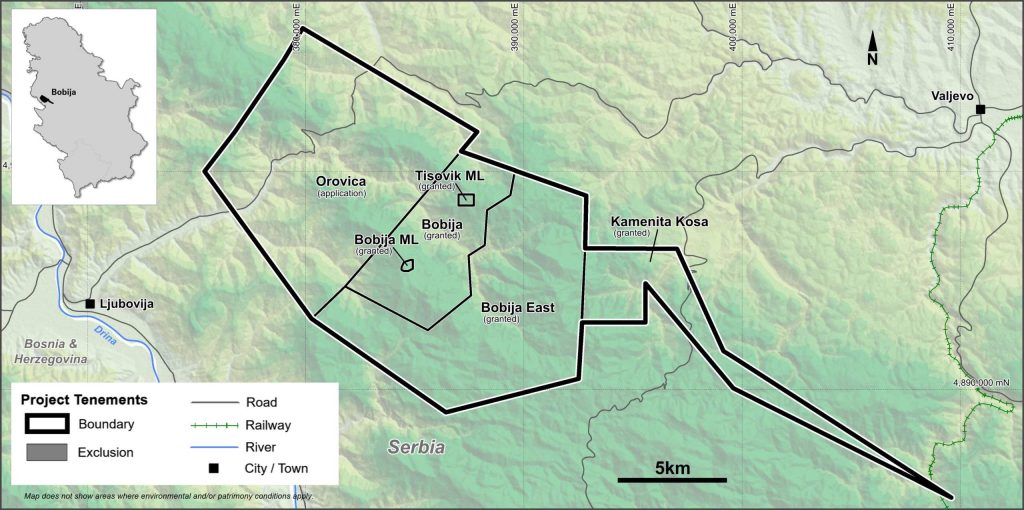
The Bobija Project is comprised of three exploration licences (Bobija, Bobija East and Kamenita Kosa) and one exploration licence application (Orovica), all held 100% by the Company.
The Company also has access and acquisition rights in relation to two granted mining licences (Bobija ML and Tisovik ML), held under a 10-year option and joint venture agreement.
Bobija Target
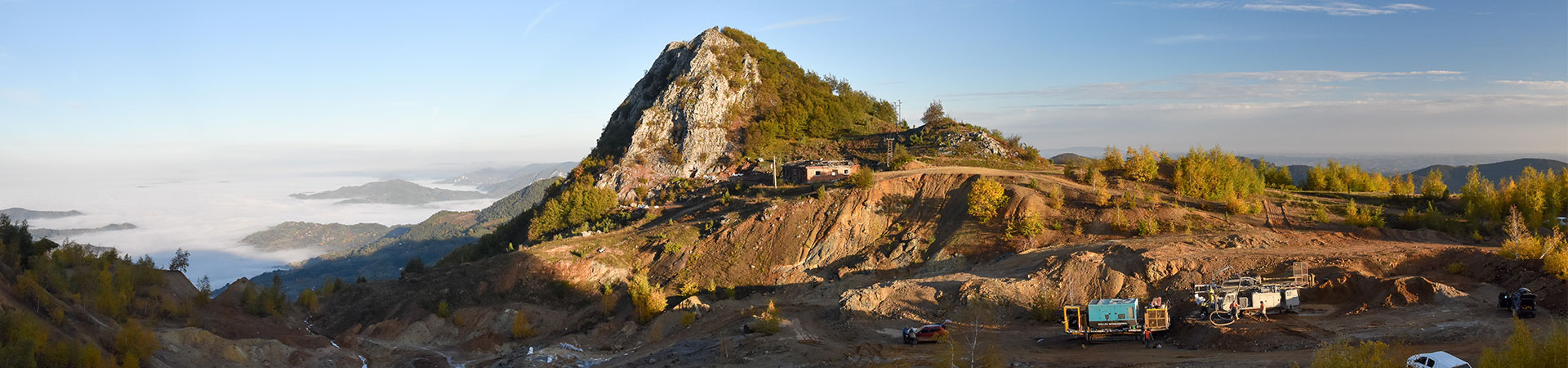
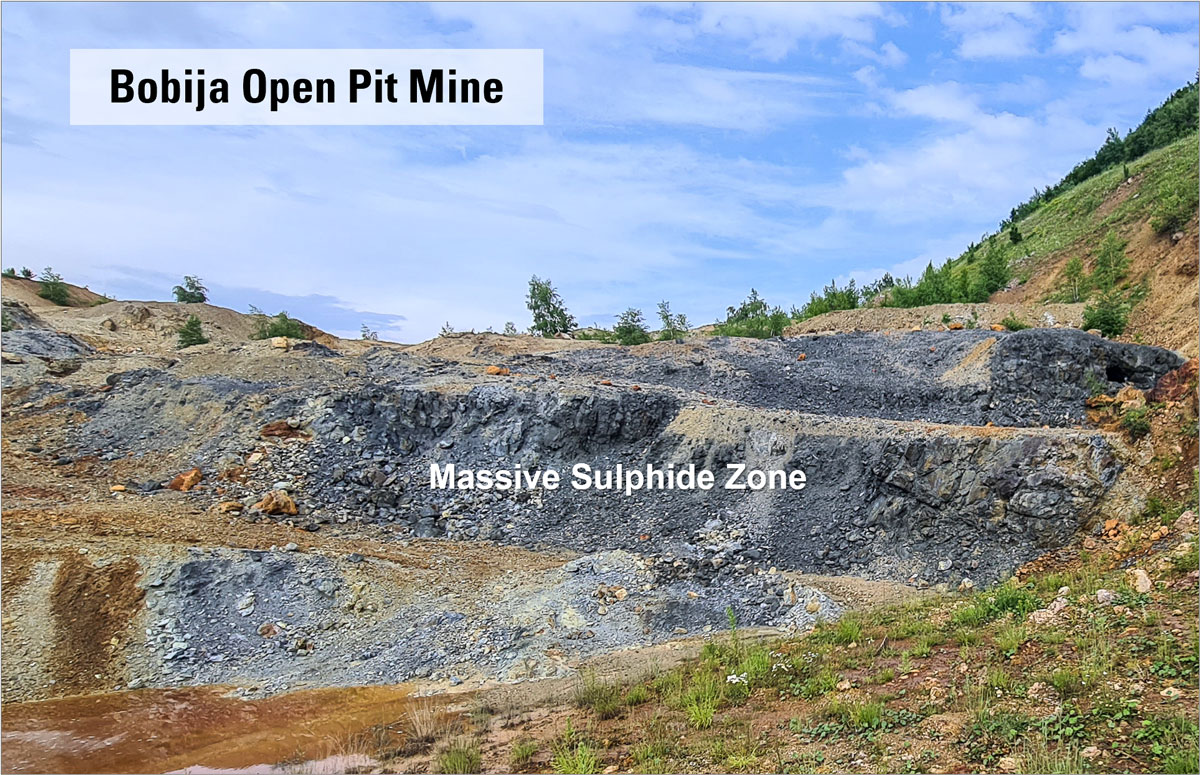
Sulphide Mineralisation in Pit Floor
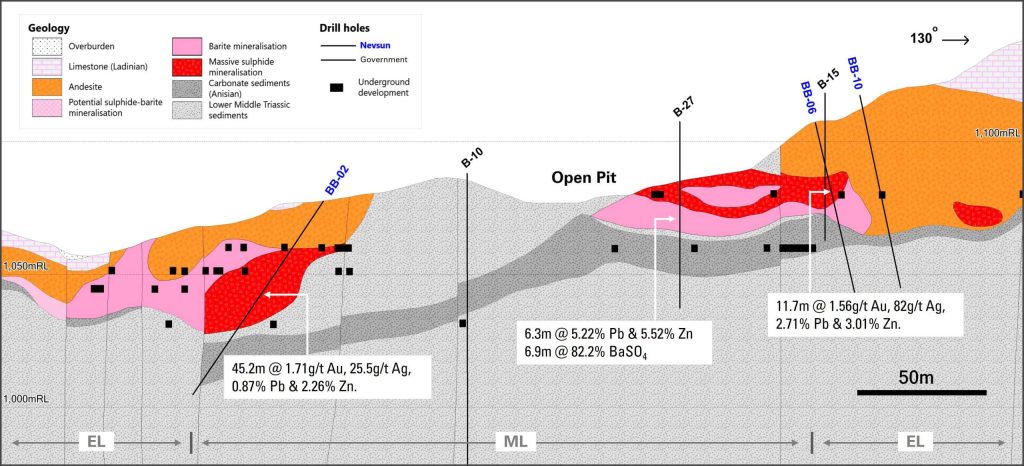
The Bobija gold-silver-lead-zinc-barite deposit comprises sub-horizontal discontinuous lenses of barite-sulphide mineralisation hosted within silicified and altered Triassic sediments.
Mineralisation is exposed within the floor of the historic open pit and has been defined in multiple zones based on historical exploration drilling and underground development.
Bobija Target
Massive Barite and Sulphide Zones
Bobija Target
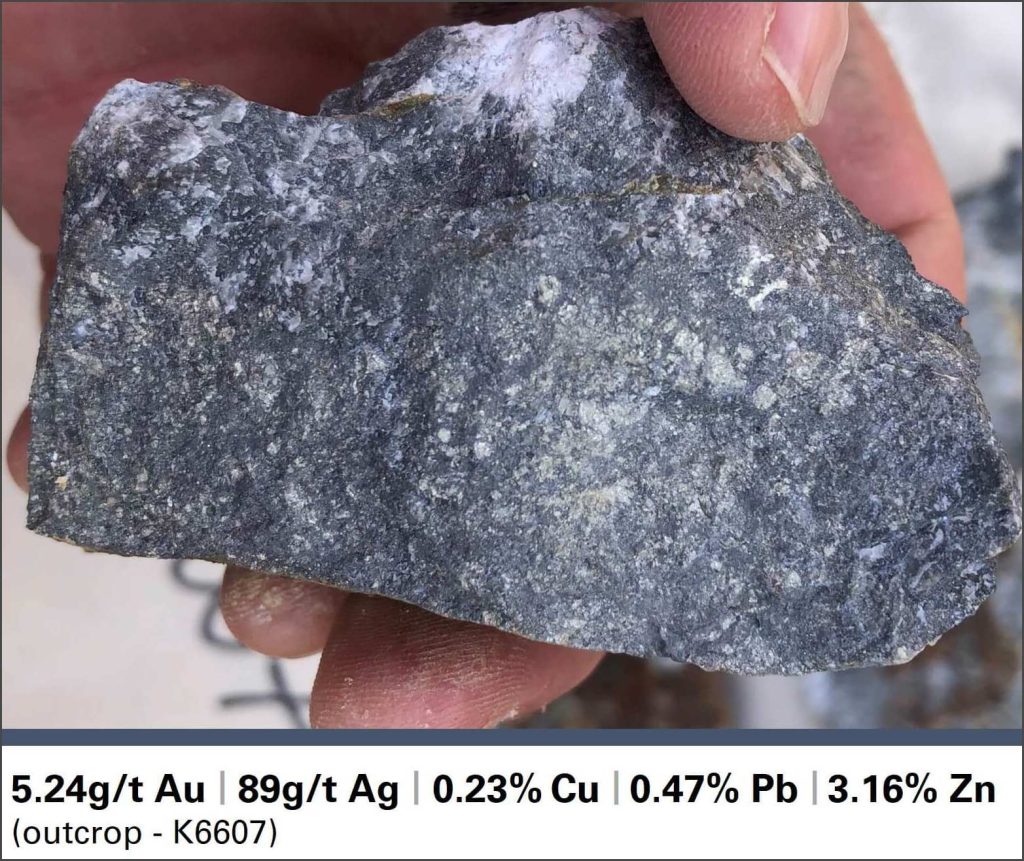
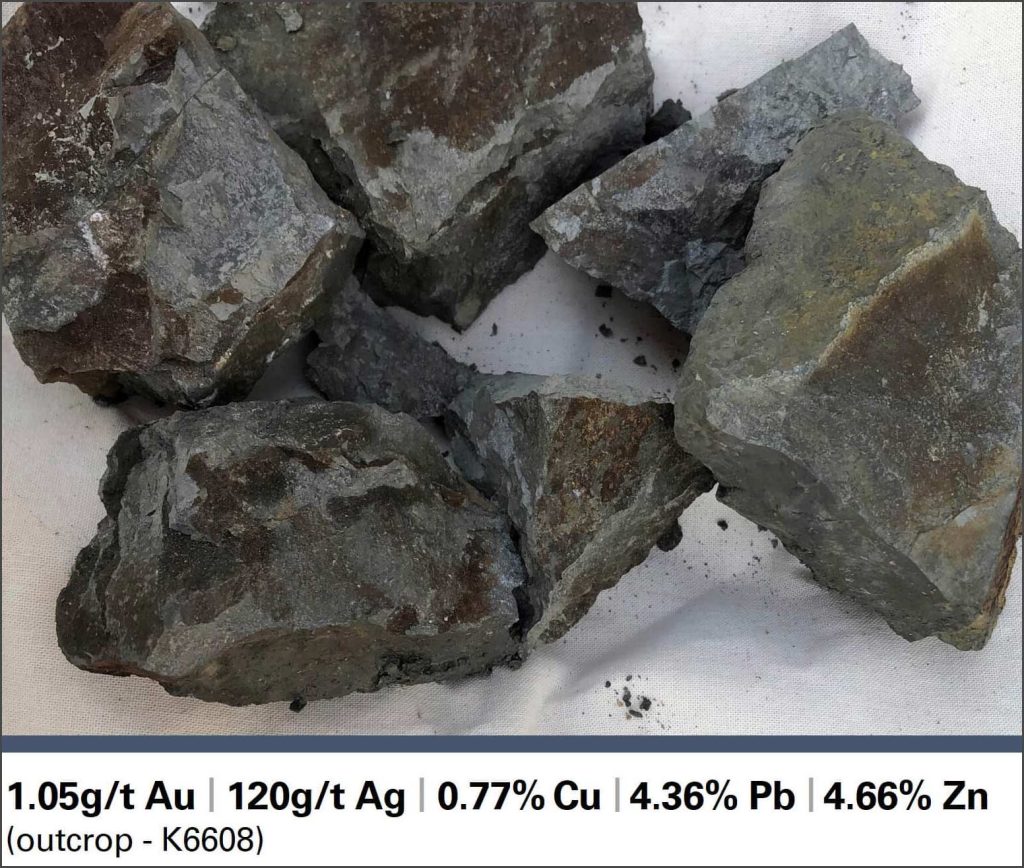
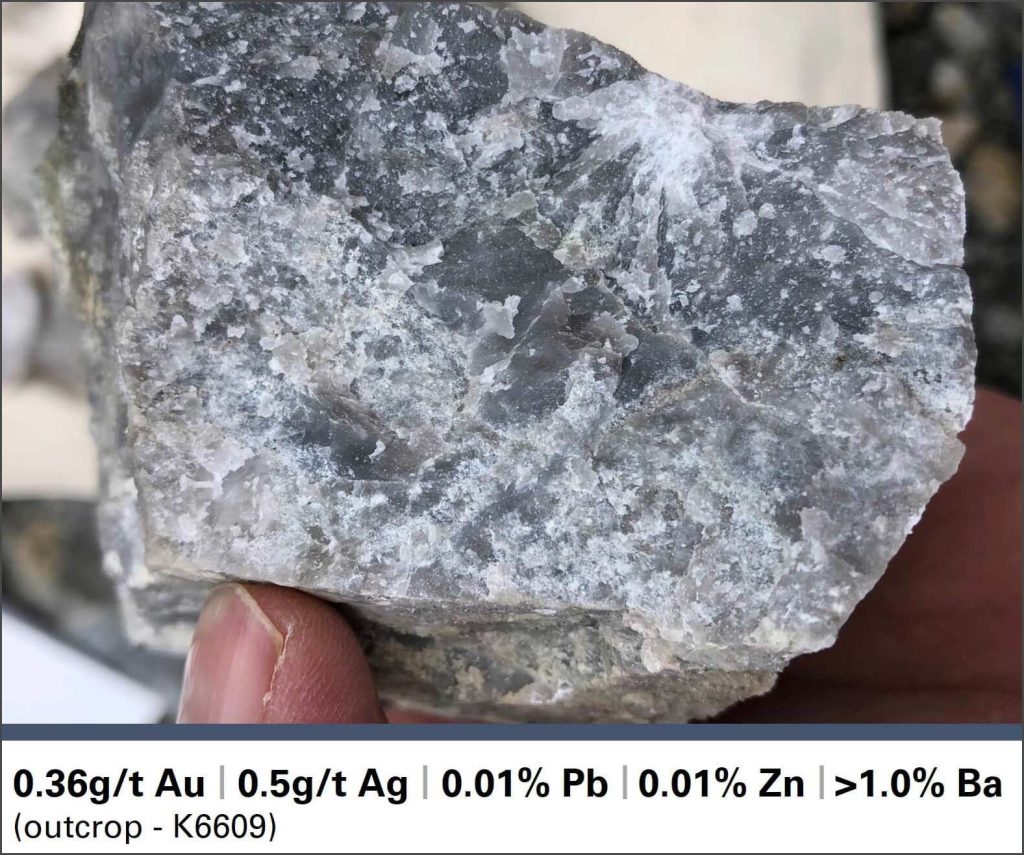
Rock chip samples up to 5.24g/t Au
Historical (pre-2007) drilling and rock chip samples from Bobija were typically never analysed for gold, silver or copper.
Initial rock chip samples collected by the Company recorded high grade polymetallic mineralisation in the pit floor and confirmed elevated gold grades with gold assay results up to 5.24g/t Au.
Tisovik Target
+50% Lead Mineralisation
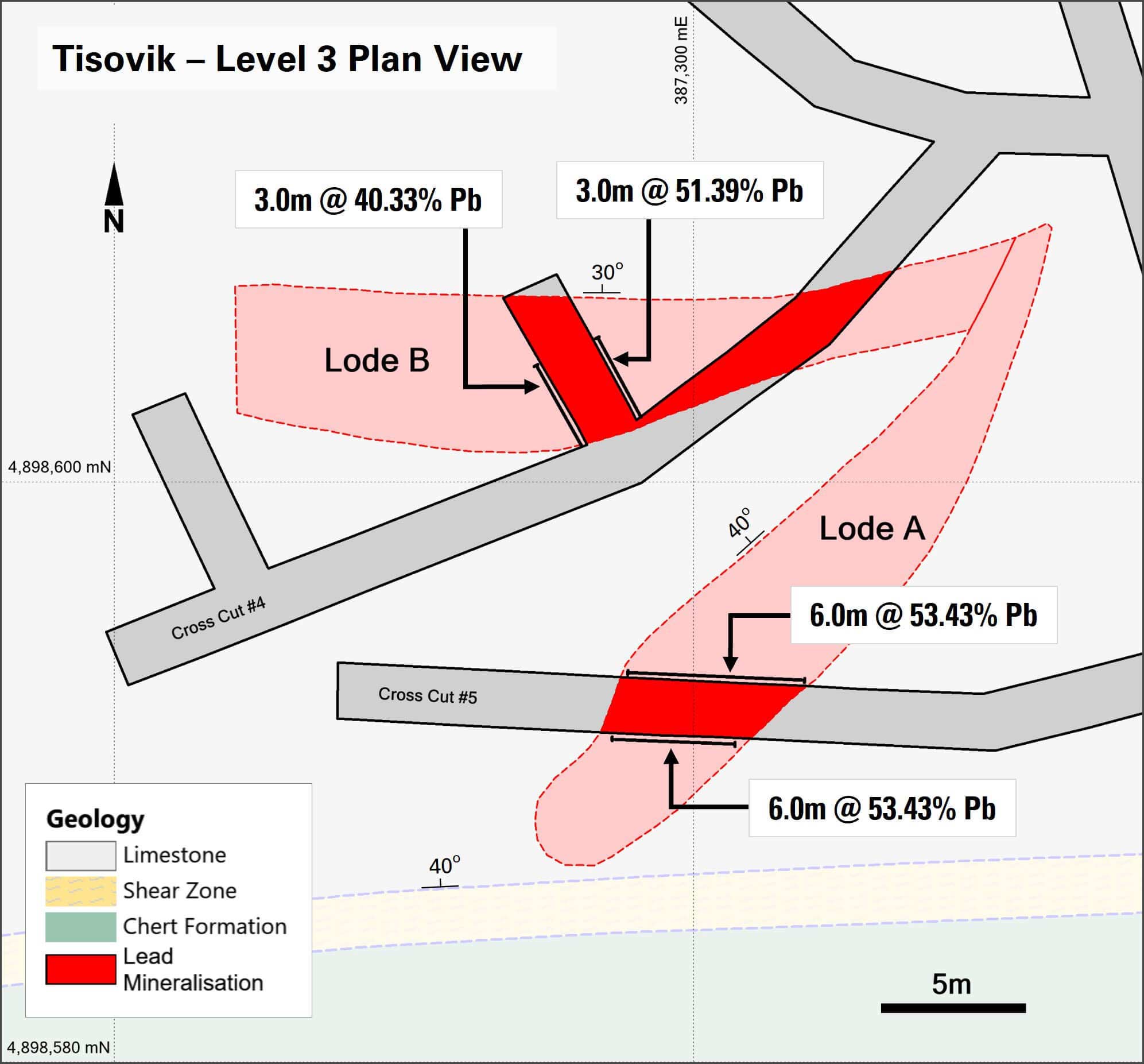
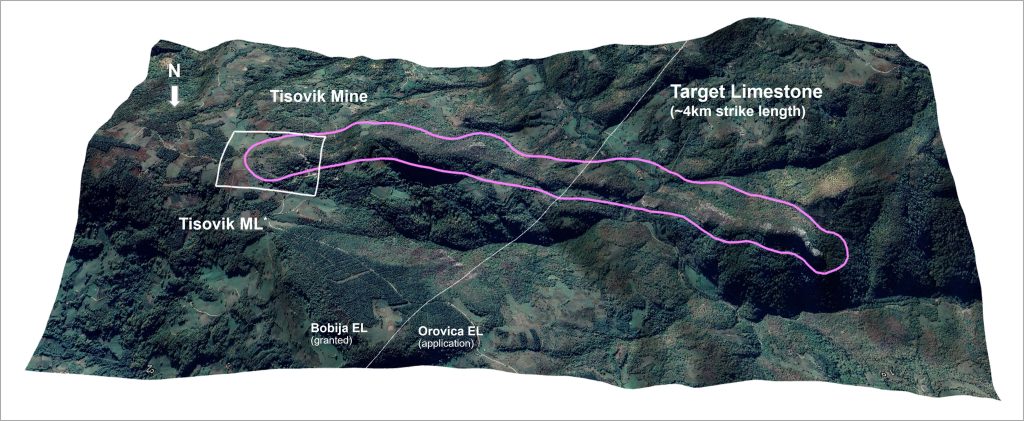
The Tisovik Mine was first developed in 1934 to exploit high grade cerussite (lead carbonate) mineralisation hosted in Triassic limestone.
Further underground development completed in the mid-1970’s recorded mineralisation in two north-dipping lodes exposed on two levels.
Underground face samples from the same time shows the mineralisation to be very high grade, averaging 1.4m @ 31.7% Pb on the upper mine level (level 2), increasing to an average 3.4m @ 50.8% Pb on the lower mine level (level 3).
Tisovik Target
Potential 4km Limestone Horizon
Rebelj Target
Copper Sulphide Deposit
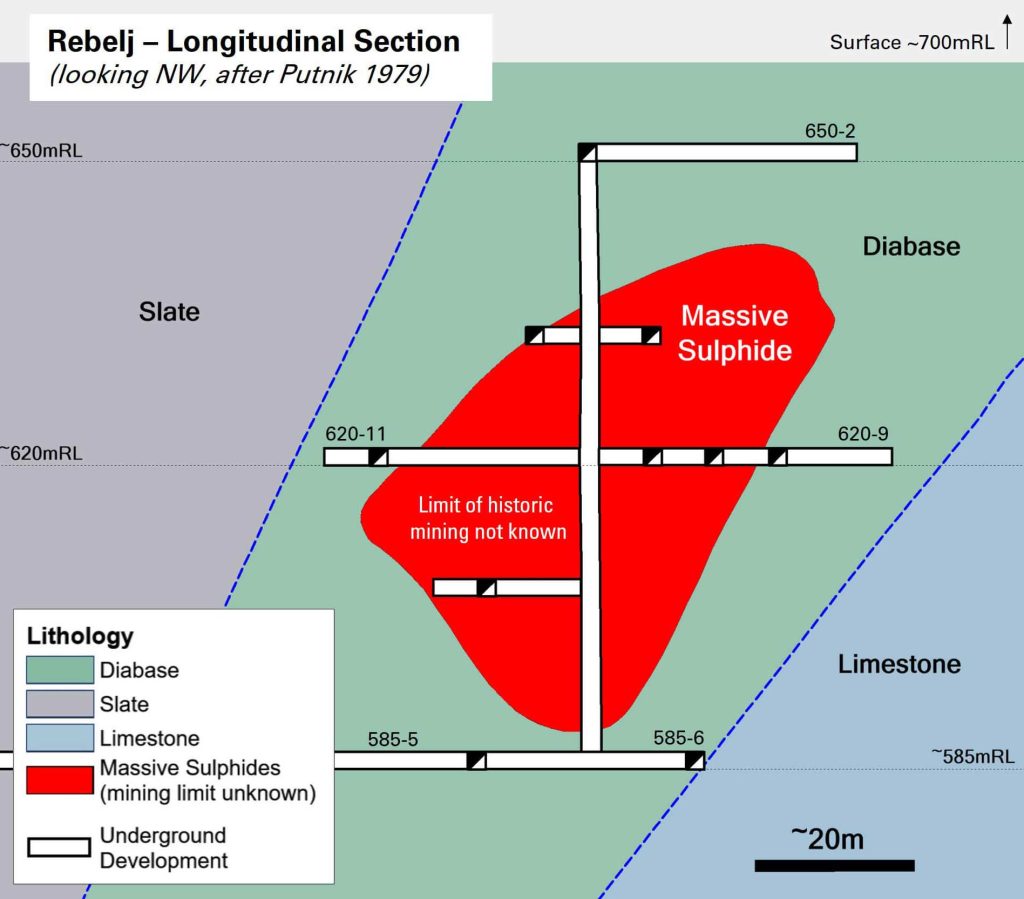
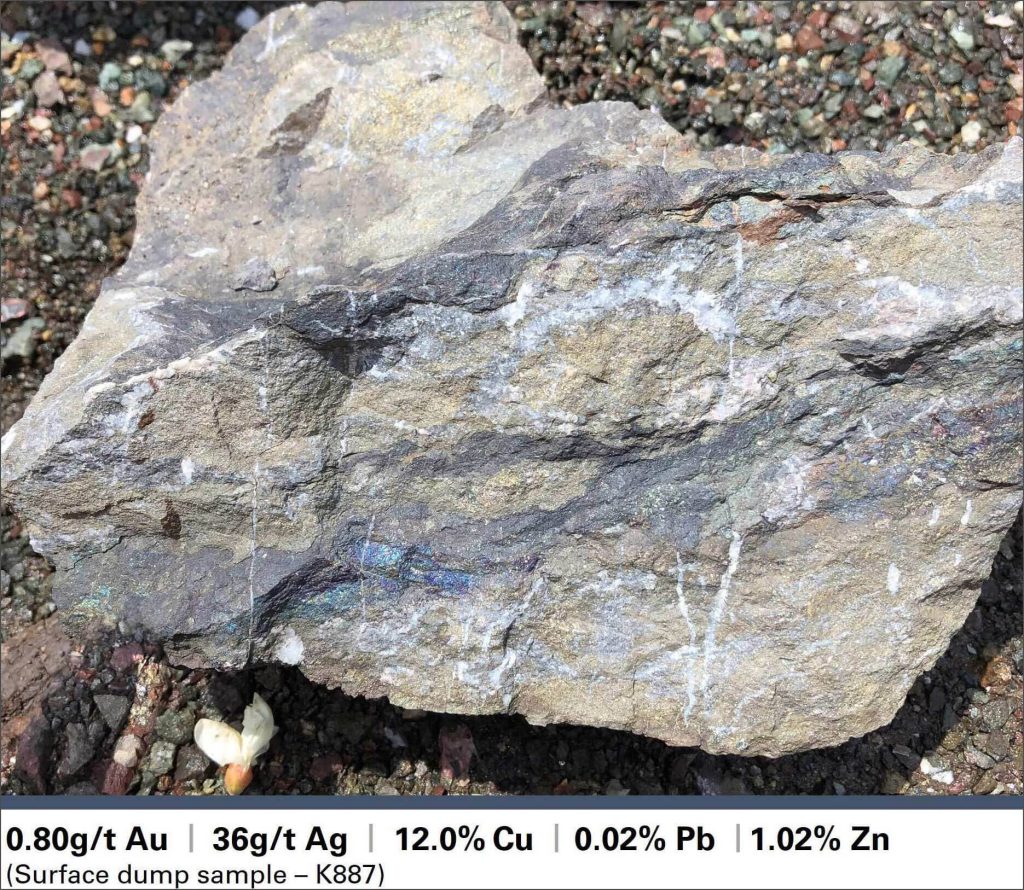
The Rebelj Mine was first developed in 1898 targeting massive copper sulphide mineralisation in lenticular “crush” zones. Historical reports indicate that the deposit is also highly anomalous in gold, silver and zinc.
The Company interprets Rebelj as a Cyprus-style volcanogenic massive sulphide (VMS) deposit and believes that there is potential for the discovery of additional copper sulphide bodies within the greater mine area. Sampling of surface dump material by the Company has confirmed the polymetallic nature of the deposit with assay results of 12.0% Cu, 1.0% Zn, 0.8g/t Au and 36g/t Ag.
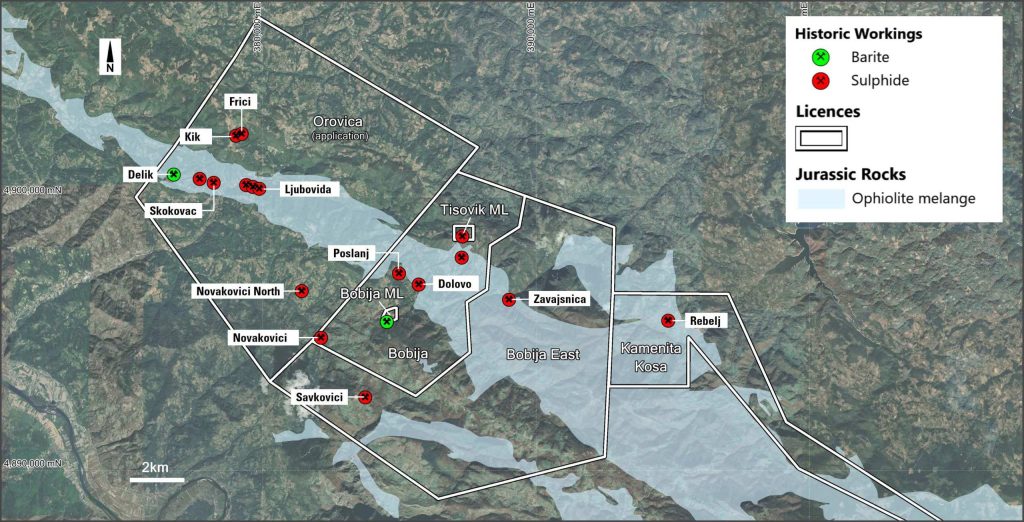
Additional Regional Targets
Widespread Historic Workings